


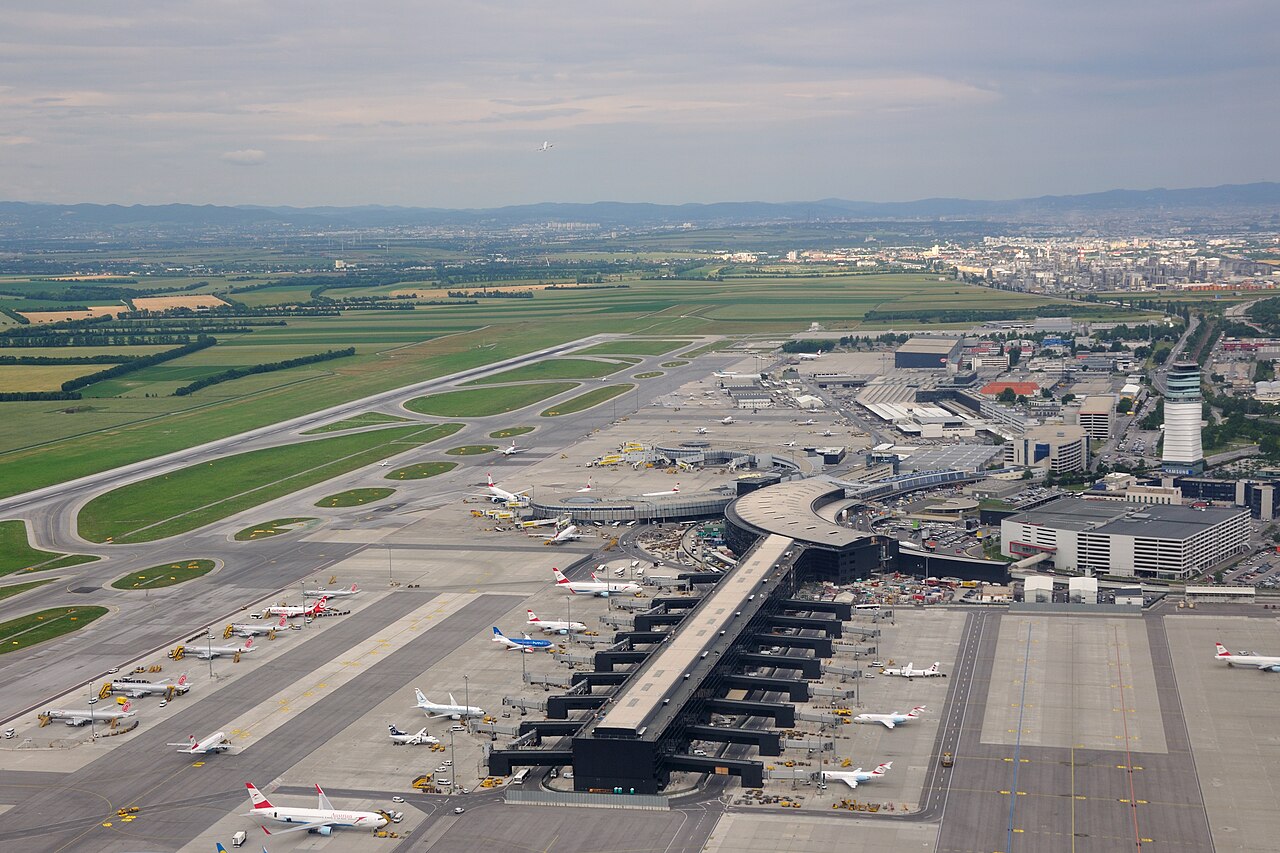
Passenger traffic between Vienna and the Nordic countries increased by around five percent in the first nine months of 2026, despite an overall decline at the Austrian hub. Now, Vienna Airport is looking to build on that growth, with more frequent flights, potential new routes and a €420 million terminal expansion. For travellers from Denmark, Sweden, Norway and Finland, the question is whether Vienna can become an even more attractive gateway to Europe and beyond.
For Nordic travellers, Vienna Airport wants to offer more than a convenient connection to the Austrian capital. The airport is positioning itself as an alternative hub for journeys to destinations across Central, Eastern and Southeastern Europe, as well as further afield.
Speaking to InsideFlyer at Routes World in Frankfurt, Julian Jäger, CEO of Vienna Airport, highlighted the Nordic region as an important market with considerable potential for further growth.
“Our focus is on attracting additional airline capacity, strengthening existing partnerships and opening up new markets,” says Jäger.
For passengers, that ambition could eventually translate into more departure options, better schedules and additional connections. However, the airport has not announced any specific new Nordic routes.
Copenhagen leads, but opportunities extend across the Nordics
Copenhagen is Vienna’s largest Nordic market, followed by Stockholm, Helsinki and Oslo. Passenger traffic between Vienna and the Nordic region grew by approximately five percent in the first nine months of 2026 compared with the same period last year.
The longer term trend is even more significant. Traffic is around 14 percent above 2019 levels and more than 50 percent higher than in 2016.
These figures suggest that demand between the two regions has developed substantially, creating a stronger foundation for future airline discussions.
Vienna also serves a broader range of Nordic destinations through Austrian Airlines’ seasonal network. Flights to Tromsø, Rovaniemi, Ivalo and Evenes connect travellers in Northern Norway and Finnish Lapland with Vienna, where they can access onward connections to international destinations.
For Nordic passengers, these services offer opportunities in both directions. Travellers can reach Vienna for a city break or continue to destinations across the airline’s wider network, while visitors from Austria and connecting markets gain access to Nordic cities and winter destinations.
Jäger sees scope to build further on this demand.
“We see opportunities to strengthen frequencies on established routes and develop additional direct services where demand supports them,” he says.
That is an encouraging signal for Nordic travellers, although the development of individual routes will ultimately depend on airline capacity decisions and commercial demand.
Could Vienna become a stronger alternative to other European hubs?
Nordic travellers connecting to destinations beyond their home countries often have several European hubs to choose from. Vienna wants to strengthen its position by combining an extensive network with efficient transfers and reliable operations.
Its location makes it particularly relevant for journeys to Central, Eastern and Southeastern Europe. Depending on the destination, routing and schedule, Vienna may provide an alternative to connecting through Frankfurt, Munich, Zurich or Istanbul.
The airport also emphasises punctuality and efficient security processes, both of which can make a difference when passengers have connecting flights.
A major part of the strategy is the €420 million expansion of Terminal 3, scheduled to open in April 2027. The project will add approximately 70,000 square metres of terminal space, including new lounges, additional gates, improved transfer facilities and more shopping and dining options.
“Our ambition is to become a five star airport, offering top quality facilities and services for airlines and passengers alike,” says Jäger.
For Nordic passengers, the investment is relevant because a hub’s appeal depends not only on the number of available destinations but also on how straightforward the transfer experience is. More space and improved facilities could strengthen Vienna’s offer, although the benefits will depend on the final facilities and how they are used.
SAS is back in Vienna. What does that mean for Nordic passengers?
One of the most notable developments is SAS’s return to Vienna in October 2025, when the airline resumed a year round Copenhagen service after a seven year absence.
The route gives travellers between Denmark and Austria another option and adds to the competition between airlines serving the market.
SAS’s move from Star Alliance to SkyTeam has also changed the alliance landscape for Nordic passengers connecting to Central Europe. Austrian Airlines remains part of Star Alliance, with Vienna serving as an important hub for onward travel.
Could this create opportunities for Austrian Airlines and Vienna Airport to attract more Nordic transfer passengers?
Jäger believes there is potential, but cautions against viewing the market exclusively through the lens of airline alliances.
“I would not look at the Nordic market purely through the lens of airline alliances,” he says.
His argument is that passengers ultimately choose connections based on convenience, reliability, schedules and price, rather than alliance membership alone.
For travellers, this means Vienna’s ability to compete will depend on the actual connections available, including departure times, total journey duration and the destinations served. The change in alliances may create opportunities, but it does not automatically mean that new routes or improved connections will follow.
More options for Nordic travellers, but no new routes confirmed
Vienna Airport is clearly interested in expanding its Nordic business. Growing passenger numbers, established connections to the Nordic capitals and seasonal services to Northern Norway and Finnish Lapland provide a platform for further development.
At Routes World, the airport is meeting airlines to discuss additional capacity, new markets and stronger partnerships. Jäger also identifies Asia and South America as markets with long term growth potential for Vienna’s international network.
For Nordic travellers, the most relevant outcome would be tangible improvements: more direct flights, higher frequencies and better connections to destinations that are currently difficult or time consuming to reach.
For now, Vienna Airport has not confirmed specific new Nordic routes. But its message to airlines is clear: it wants to grow, and it sees the Nordic countries as an important part of that strategy.
If the airport can turn its growing passenger demand into additional airline capacity, Vienna could become a more competitive option for Nordic travellers seeking alternatives to the traditional European hubs.
Photo: Hansueli Krapf – Creative Commons Attribution-Share Alike 3.0 Unported


